
“Whose Voice Is It, Really?” — Neil Riser’s Push for CCS and the Silence of His Constituents
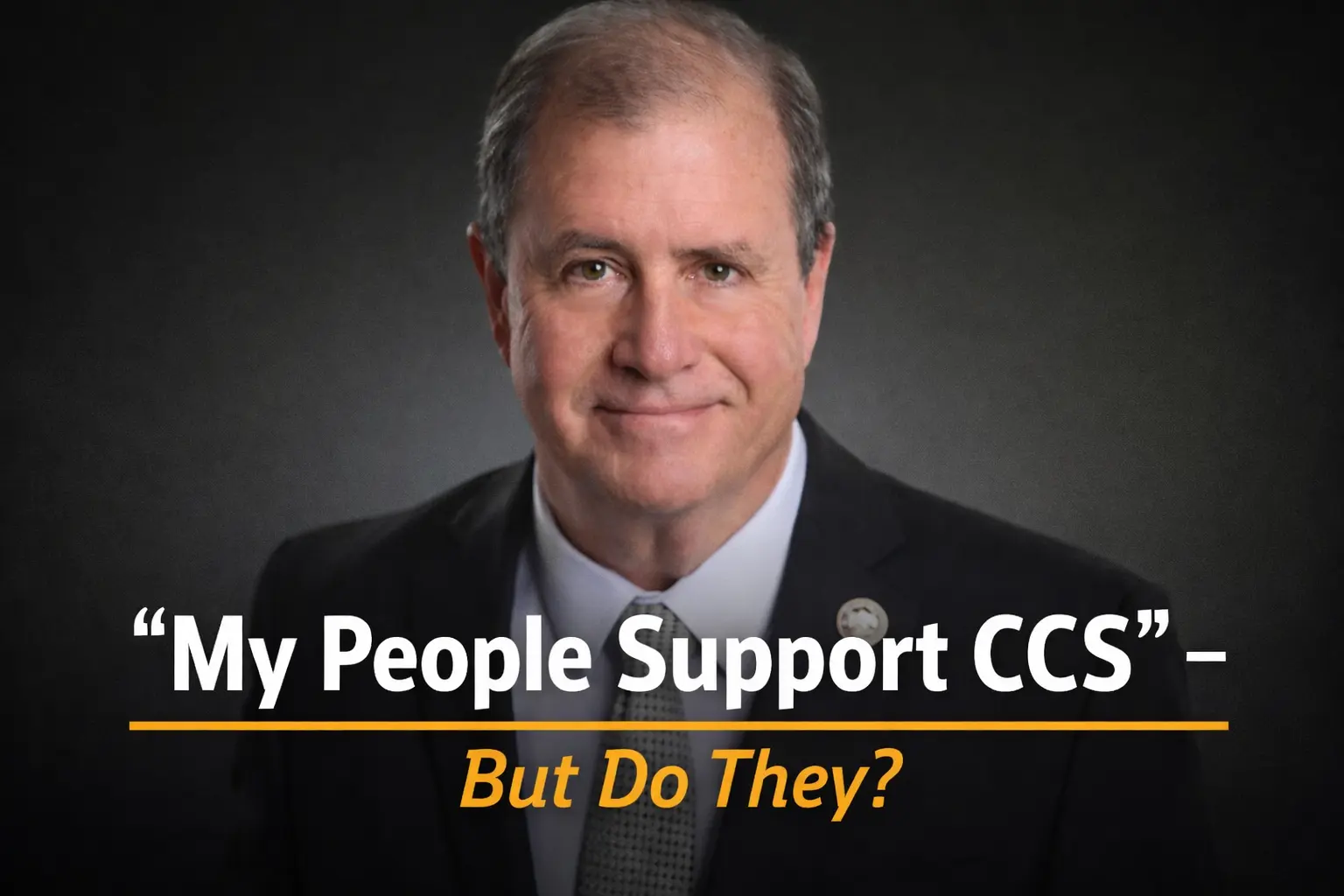
Rep. Riser says “my people are for this” — but is that true, or is industry writing the script in Caldwell Parish?
In the halls of the Louisiana State Capitol, few voices have been more consistently supportive of carbon capture and storage (CCS) than that of Representative Neil Riser. Time and again, Riser has assured fellow lawmakers that his constituents in Caldwell Parish and surrounding areas are fully behind projects like Louisiana Green Fuels (LGF) — a massive bioenergy facility with on-site CO2 injection wells.
In the 2025 legislative session, Riser declared with unmistakable confidence: “I knew exactly what I was voting in in 2020 when I voted for SB353.” The bill laid the groundwork for expanding CCS infrastructure across the state, and Riser was not just on board — he was driving the train. His refrain in Baton Rouge has remained consistent: “My people support CCS.”
But do they?
The Louisiana Green Fuels Project: A Massive Industrial Gamble
At the center of Riser’s pro-CCS narrative is the Louisiana Green Fuels project, developed by Strategic Biofuels. Located at the Port of Columbia in Caldwell Parish, LGF will gasify wood waste and inject more than 1 million metric tons of CO2 per year deep underground through Class VI wells. The facility, still under development, will be Louisiana’s first commercial bioenergy CCS project.
Supporters claim it’s a climate solution and economic engine. But many Caldwell residents are just learning the scope of the project — and what they’re finding out is sparking concern: heavy industry, eminent domain laws that allow land grabs, risks to groundwater, and long-term liability that could haunt the region for generations.
Representative or Industry Advocate?
Riser’s backing of LGF and CCS comes as no surprise to observers familiar with his campaign finance history. A review of public records shows generous contributions from industry PACs and energy-sector donors, including those with ties to pipeline, oil, and gas interests. These financial relationships raise a question that Riser has yet to answer: when he says “my people support this,” does he mean the voters back home in Caldwell and Catahoula — or the industry executives writing checks in Baton Rouge and beyond?
While Riser assures colleagues that his district is on board, no public parish-wide poll has been conducted in Caldwell to confirm such support. Unlike other parishes where residents have mobilized and voiced strong opposition, Caldwell has remained largely quiet — but silence should not be mistaken for consent.
A Pattern of Legislative Favor
Riser’s legislative history shows a pattern of tailoring policy to ease the path for CCS developers:
- He sponsored Act 163, which restricted drilling near designated storage zones like LGF’s.
- He voted to expand eminent domain powers for carbon pipelines.
- He downplayed risks of CO2 leaks, seismic activity, and water contamination when others raised them.
In floor debates, Riser has gone so far as to suggest that strong environmental oversight might scare off investment. For a representative of one of the most rural, resource-rich parts of the state, that message hits differently: it suggests profit first, people second.
Caldwell Parish Deserves a Voice
As the 2026 legislative session nears, residents of Caldwell and neighboring parishes have an opportunity — and a responsibility — to speak up. Riser may continue to assure Baton Rouge that all is well at home, but the people he represents must ask themselves: Was I ever asked? Did I ever agree to this?
Because if not, then perhaps the voice echoing through the Capitol isn’t Caldwell’s voice at all. It’s industry’s — and Riser may just be the microphone.

